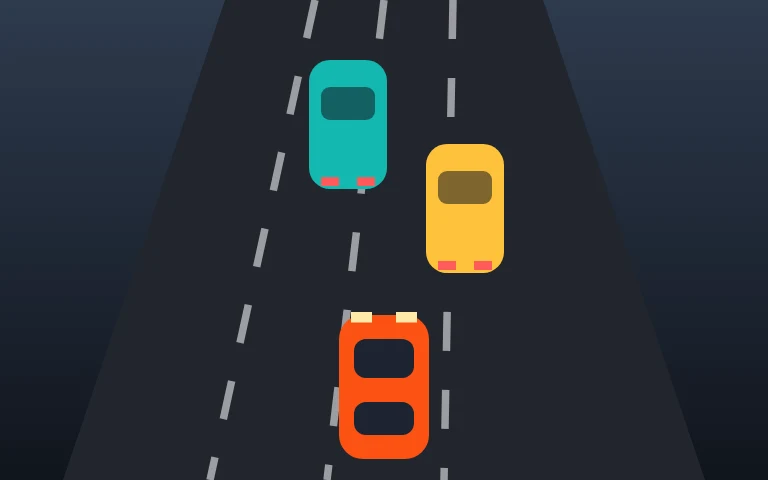
Traffic Rush is a one-hit endless runner with four lanes and climbing speed. Because a lane change takes a moment, every change is a commitment — and lane-dancing at speed is what actually kills runs.
The gap, not the car
Watch gaps between vehicles, not the vehicles. Two cars in adjacent lanes with a shared gap between them are a single corridor; a "clear lane" with cars staggered at wrong offsets is a maze.
Before committing to a lane, read its next two car-lengths. If the second gap is misaligned with the first, that lane is a trap no matter how open it looks.
Change lanes early and one at a time
The lethal move is a double lane change initiated late: you see a block ahead, cross two lanes at once, and clip the car in the intermediate lane that you did not check.
The discipline:
- Spot the block two seconds out, not one.
- Move one lane, confirm the intermediate gap, move again if needed.
- Never change lanes while another change is still in progress.
Two early single moves beat one late double move every time.
The outside lanes are calmer
Lanes near the edges have less cross-traffic to read — trucks cut across fewer of them, and the AI density feels lower. The centre lanes offer more escape options but demand more scanning.
A workable default: live on the second lane from one edge, keep the edge lane as your emergency exit, and only cross the centre when the far side is clearly better for several seconds of travel.
The lane you keep is worth more than the lane you gain. Speed is bought with stability.
Speed changes the horizon
As the dash accelerates, your reaction window shrinks. The adjustment is not "look harder" — it is look further. At low speed, reading one car ahead is enough; at high speed you need the pattern two or three cars deep, because your lane changes take effect later.
If you notice yourself clipping cars while feeling perfectly attentive, that is the horizon talking: you are reading at yesterday's distance.
Points come from survival
Most score in lane runners comes from distance, and distance comes from not dying. Overtaking bonuses do not justify a risky weave — the expected value of threading a tight gap at speed is almost always negative.
The boring strategy is the scoring strategy: hold a good lane, change rarely and early, and let the speed climb while other players dance.