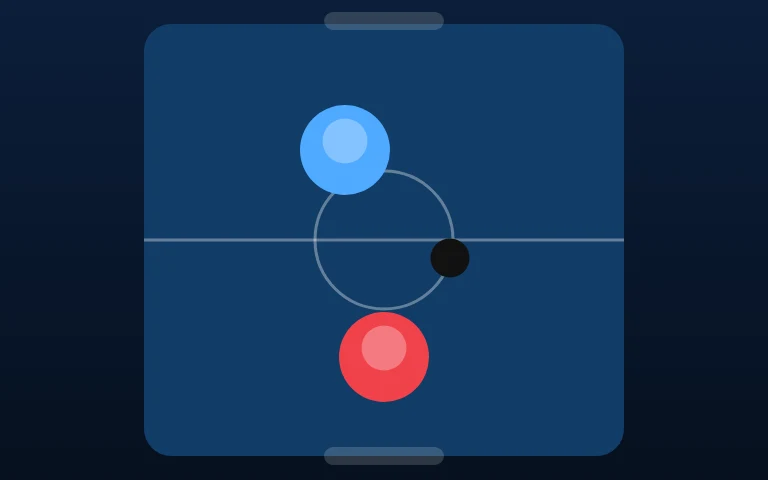
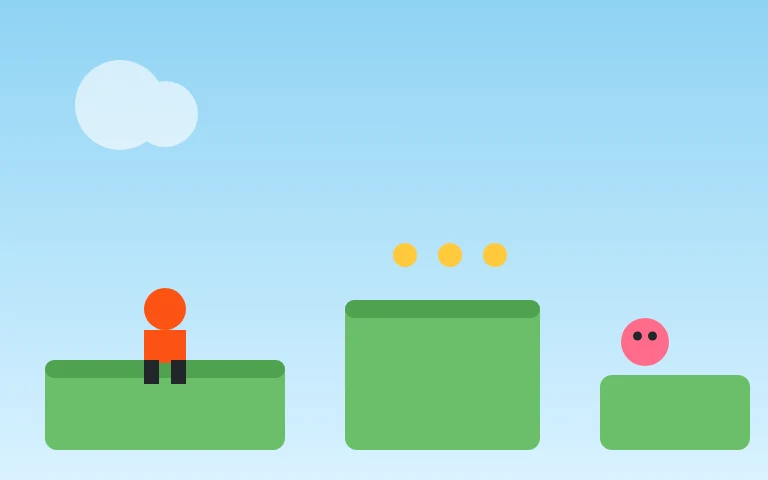
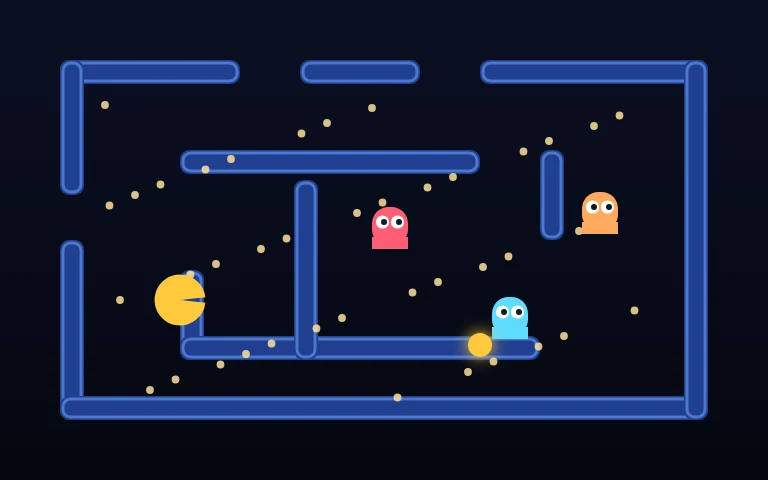
There is a specific moment in a short game when you decide to play again. It happens about a second after the fail sound, before the score screen finishes animating. Everything a designer does is aimed at that second.
The gap between runs
Long games ask for commitment; short games ask for a click. The click is cheap because the cost of a bad run is ninety seconds, not ninety hours. That low cost is the entire engagement model: it removes the negotiation of whether to start.
The catch is that the game has to make the restart feel like progress. If the next run starts from zero with no memory of the last one, most players stop after three attempts.
Loss aversion, used gently
The most reliable trick in the genre is showing the player how close they were. A score of 118 against a best of 124 is more motivating than a score of 60 against a best of 400. Designers therefore make the fail state informative: what killed you, how far you got, what your best is.
This is why almost every arcade game puts the last score and the best score side by side. It is not decoration; it is the argument for one more run.
The first thirty seconds
A short game has to teach its rules without a tutorial. The usual solution is to make the first run deliberately easy — no enemies for ten seconds, wide gaps, a slow scroll — and then raise difficulty on a curve the player can feel but not calculate.
That curve is the real content. If difficulty is flat, the game is a toy. If it spikes, players quit at the spike. The good version increases pressure just slightly faster than skill improves.
Fairness is a feeling, not a formula
Players forgive randomness if they can see it coming, and they resent deterministic systems that feel arbitrary. That is why good short games telegraph: the next pipe appears early, the enemy flashes before it charges, the ball leaves a trail.
The corollary is that a death must always be explainable in one sentence. "I tapped too late." "I aimed at the middle." If the explanation is "the game decided", the player stops believing that another run would be different.
Why this matters for a portal
A site with a hundred small games is not competing for hours, it is competing for the moment someone has three minutes and no plan. The games that work in that slot are the ones where a run is complete, the score is honest, and the restart is instant.
That is also why we do not gate anything behind an account. The loop is: open, play, see a number, try once more, close. Every extra step between those five beats costs players.
The quiet design goal
Not to make a game you cannot stop playing. To make a game where stopping and starting again both feel fine — and where, once in a while, the number on the screen is better than the last one.